
We went on a guided bike tour on our first full day in Kyoto. We timed it perfectly as the weather was sunny and nearly 60 degrees! They had had a blizzard less than two weeks ago, so we were indeed lucky. We booked through a company called Kyoto Cycles which was just around the corner from our hotel. There were just four of us in the tour, along with our guide and business owner. Both were transplants – the guide was from New York and the owner was from England. They had spent many years in Kyoto so were knowledgeable, but also understand the things that might interest us more as westerners.


The important sites are spread out all over Kyoto, so seeing them by bike was a great way to do it. Plus, we had the bonus of biking through interesting neighborhoods and getting some fresh air and exercise. We biked about 20 miles over the course of the day – never biking more than 15 minutes between stops. We saw seven of the UNESCO world heritage sites, plus lots of other hidden gems along the way.
All the temples (Buddhist) and shrines (Shinto) we saw were made of massive timber frames with no mechanical fasteners or nails. The joinery was impossibly complex – especially on the eaves of the roofs. They often painted the end grain of the rafters white to prevent rotting – and some were even encased in copper. The posts and even floor boards were made of cedar and massively thick. The roofs were covered in ornamental tiles and many included ingenious ways to capture rain water which they stored in basins around the temple in case of fire (which have ruined numerous shrines over the years).


At one of the Buddhist temples called Honganji, there was a memorial service going on. We sat inside and watched the monk and some musicians for a while. Here is a short video of the music.
At one of the shrines we made an offering. The ritual here went like this: approach the shrine and throw a coin in the wooden grates. It makes a kind of plinko sound. Bow two times then clap your hands two times. Silently say your prayer for what you are wishing for. Bow one more time and clap once. Different shrines seemed to have slight variations to this. Many had a rope you pulled to ring a bell or rattle.

There are many shopping arcades servicing local neighborhoods. These were basically covered streets with lots of little shops, food stands, services and restaurants. We rode our bikes down part of one. Like elsewhere, I was amazed at how long it was. Maybe a mile? We stopped here for a snack of Taiyaki which means baked red snapper. Red snapper is a lucky fish. It actually wasn’t fish – it was a waffle-like cake just shaped like one. Ours was filled with red bean paste, which was sweet and creamy. It was surprisingly delicious.


The golden temple (Kinkaku-ji) is one of the most iconic sites in Kyoto if not Japan. It is surrounded by zen gardens. Moss gardens, bonsai trees, little waterfalls, ponds, islands and little bridges. On the edge of the pond is a temple enameled in gold. Sophie and I liked the gardens, but thought the temple itself was a little much.


After visiting the golden temple, we had lunch in a quaint family-run restaurant. Here we had tempura vegetables and shrimp with soba noodles. After we passed by a restaurant specializing in serving puffer fish. Because it’s potentially deadly if not prepared right, the chefs need to pass strict government certification. The fish were on display in an aquarium and were very ugly. I’ll pass!


Our next destination was the old neighborhood of Gion – home of the geiko (the more respectful name for geishas). This area was an entertainment district for centuries – at one time hosting over a hundred tea houses. Today there are much fewer, but there are still geiko and maiko (geishas in training) living here, spending years perfecting their manners and skills. We didn’t see any true geiko while we were there, but there were plenty of tourists dressed up in kimonos pretending. Apparently that’s a thing people like to do.


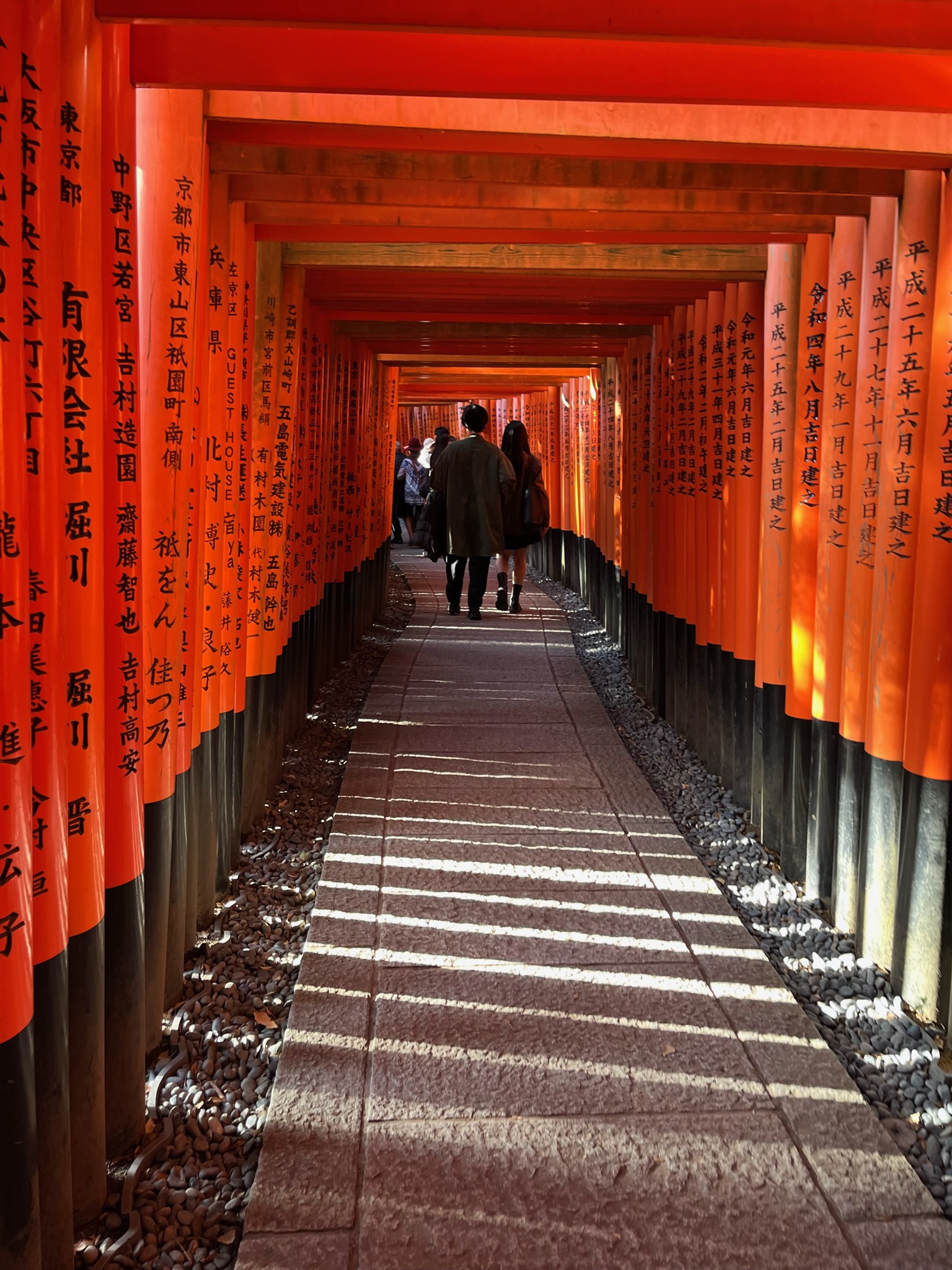
Our final tour stop was Fushimi Inari-Taisha, a Shinto shrine that is Japan’s most visited tourist spot. It is the head shrine for thousands of other shrines dedicated to Inari, the god of rice, fertility and prosperity. It is known for its orange vermillion torii gates that wind around the hills for over two miles. There are nearly 30,000 of them and they are adding more all the time. Businesses donate money to sponsor a gate for ten years at a time. They hope it will bring them good luck and prosperity. If they don’t renew their contract, the gate gets cut down and eventually replaced by someone else’s.


I’ve written before about how polite and formal the Japanese were. We were always greeted by guards when entering or leaving a shrine or temple – always with a bow. As we were leaving one shrine, our guide translated what the guard said to us as “thank you for your exhaustion” – meaning thank you for the effort you made to visit the shrine. Sophie and I have used that phrase a lot since then – always makes us smile.
So, dear reader, if you’ve made it this far in our blog, we sincerely thank you for your exhaustion!

Leave a Reply to Alice beaudryCancel reply