
Sophie and I took a day trip from Luzech to the town of Figeac which is a couple hours to the northeast. Figeac is the hometown of Jean-François Champollion who deciphered the Rosetta Stone in 1822 unlocking the key to reading Egyptian hieroglyphics. We visited the Champollion museum there dedicated to him and the global history of written language. As a bonus, the route there followed the Célé river, a tributary of the Lot. The Célé is also known as Val Paradis (paradise valley) due to its amazing scenery and historic villages perched along the cliffs. We enjoyed stopping at several sites along the way.
Cabrerets is where the Célé meets the Lot river and where we turned to start heading northeast. There is an interesting castle on a cliff right above the road here. The countryside and little villages were pretty as we drove along, stopping for a short walk near Sauliac-sur-Célé.


We then visited an ancient abbey in the village of Marcilhac-sur-Célé a bit further up the valley. The abbey ruins go back to the ninth century during the time of Charlemagne. It became a popular destination on pilgrimage routes which prompted it to be expanded in the Roman style in the 11th century. The abbey was looted and damaged in the 14th century during the hundreds year war, and again in 16th century by Protestants. Parts of the abbey were rebuilt over the centuries since, but much of the oldest areas were left in ruins. The village houses around the ruins were equally old and impressive.


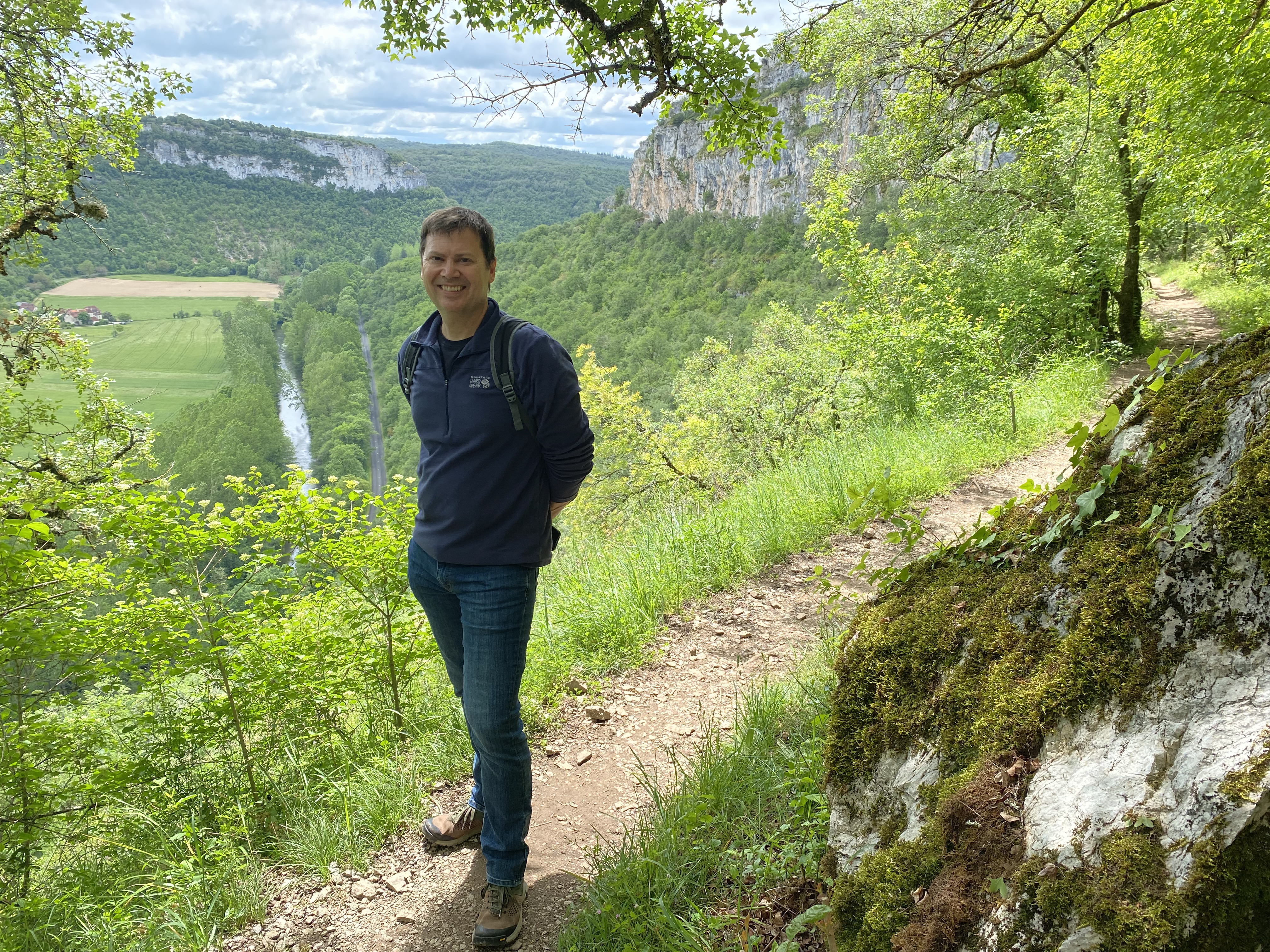
Next we stopped in Brengues where we hiked along the cliff to reach a small protective castle built right into the cliff. The views were great.


We arrived in Figeac around lunch time. Figeac is a town with just under 10,000 inhabitants. The museum was on a square in the old center of town, surrounded by narrow streets and buildings. It consisted of several levels and explained the various origins of written languages around the world. It had an impressive collection of artifacts with hieroglyphics and other symbolic languages back to the earliest days of human communication. It was fascinating to see the connections between languages, along with appreciating how difficult it was to share written language prior to the invention of the printing press! Chiseled in stone, fired in pottery, hand written in papyrus, etc. The written word was so important to organizing and elevating civilization. The museum tour ends in modern times, where one is left to wonder about the impact of our modern, instant communications that cross the world at instant speeds – or the impact of generative AI that is consuming and producing written language at a speed and scale we can’t even fathom. A large replica of the Rosetta Stone is on display in a courtyard outside the museum.


On our return to Luzech we headed directly south to return along the Lot river valley. There were more interesting villages, churches, castles and vistas to enjoy on the way – including a rare fortified church in Saint Pierre Toirac that had some very interesting Middle Ages carvings atop its columns.


Leave a Reply