
When we flew back from France at the beginning of June, we flew TAP Air Portugal which allows you to have an extended layover in Portugal for no additional cost. We spent three nights in Lisbon and really liked it.
We stayed in the old Baixa neighborhood in a really cool hotel called Ferraria XVI. It was housed in an old iron factory and featured an archaeological site in the basement alongside the breakfast room.


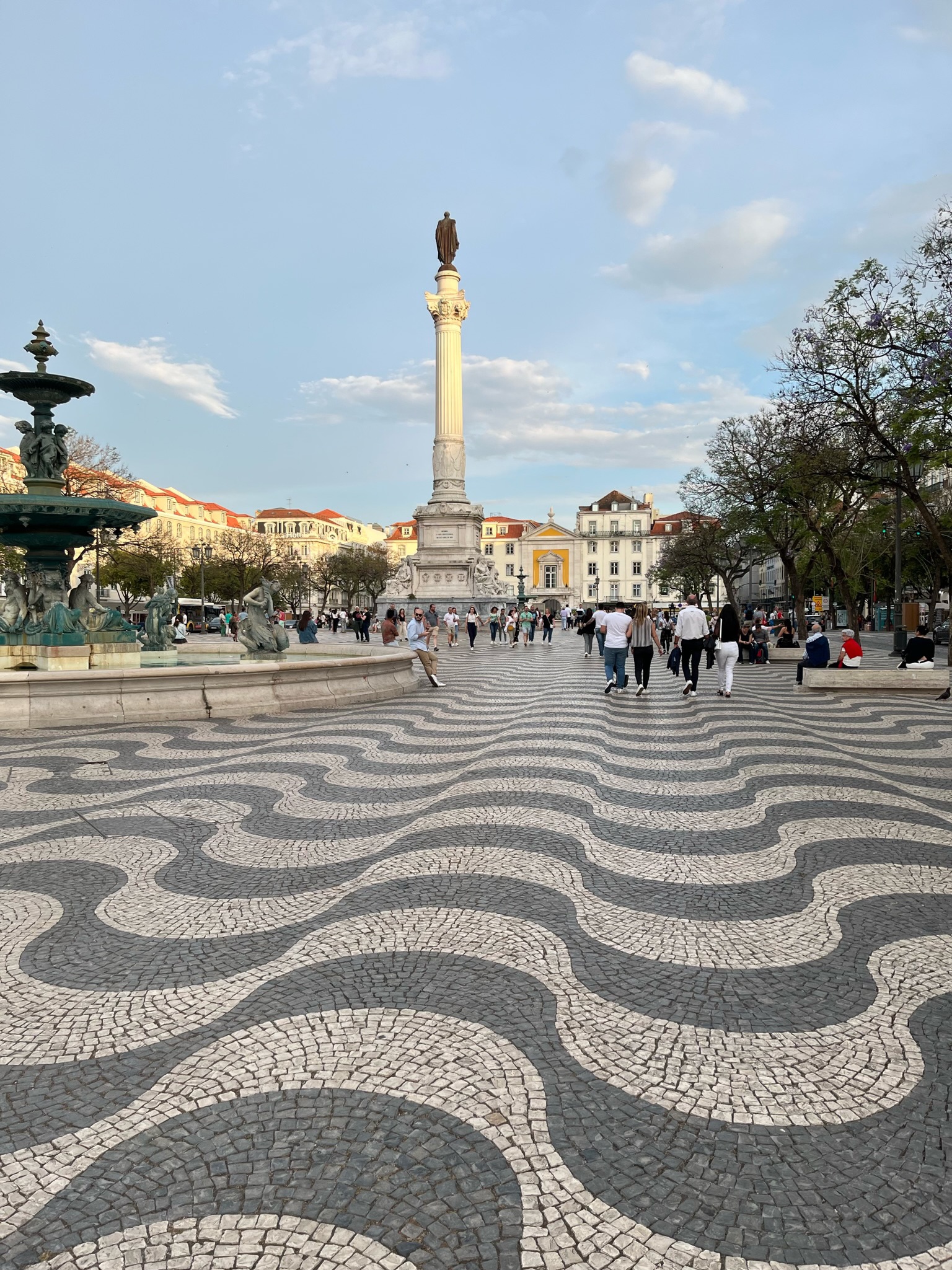
The first thing we noticed when walking in Lisbon were the amazing mosaic patterned streets and squares. They were all in various patterns with black and white tiles. We found the mosaics fascinating and beautiful.


Lisbon was destroyed in 1755 by an earthquake, and the whole city was rebuilt after that. Strict guidelines were created for all the buildings to not only withstand future earthquakes – but also included guidelines for what kind of ceramic mosaic tiles (called azulejos) could be used on the fronts.


We took Tram 28 to Sao Jorge Castle on our first day. Their tram system was modeled after San Fransisco’s, but the routes are even more steep and the streets much more narrow. Tram 28 goes up impossibly narrow and steep streets, making it a huge tourist attraction. We stood in line at the first stop for over an hour, only to find we could have walked around the corner to the second stop and jumped on as long as we were OK standing in the crowded car. Many people waiting in line are hoping for a seat by the window – which is really not that important in our opinion.


The castle was built in the 11th century atop one of seven tall hills in Lisbon. It features many fortified walls and offers a fantastic view over much of the city.


In the afternoon we took a bus to the Belém neighborhood along the waterfront. There was a famous bakery there, Pastéis de Belém, that makes one of the best Portuguese custard tart called pastel de nata (the most popular dessert in Portugal), delicious treat!


We visited the Jerónimos Monastery nearby, a UNESCO World Heritage site built in the 16th century in the manueline style.


We also walked along the river to the Belém Tower, another UNESCO World Heritage site from the 16th century, where many famous Portuguese explorers and colonizers embarked. There was a large outdoor concert going on close by, so we had a drink and listened to Portuguese bands for awhile.


Portugal is known for its fish and seafood – especially bacalhau (a dried and salted cod, their national dish) and sardines. And of course, the deliciously sweet Port wine.


Leave a Reply