
As we angled southwest out of the Poconos, we found ourselves in the bucolic and history-rich area of southern Pennsylvania often referred to as “Dutch country”. Our main stops were Pottsville, Lititz, Lancaster County and Gettysburg.


Our first stop was Pottsville where we toured the oldest brewery in the country, D.G. Yuengling & Son. Yuengling beer is sold in 26 eastern states, but not in Minnesota so we were not familiar with it. The brewery was started in 1829 by a German immigrant named David Jüngling (the original German spelling of his name). The tour was fascinating. He hired miners to dig out caves below the brewery to be used for cold storage and to get better access to the local spring for water. It took them 10 years to dig the caves as they had to do it all by hand to avoid disrupting the brewery above. The brewery is still in operation, kicking out millions of cans of beer on assembly lines. One of the interesting stops on the tour was the old Rathskeller, the in-house pub where the workers had lunch and enjoyed beer all day long (back in the day). Sophie and I like lager and Pilsner beers, so we enjoyed tasting their beers at the end of the tour. We ended up buying some of their original lager to stock the camper.


Our next stop was the quaint village of Lititz. We started our visit with the first pretzel bakery in the new world, Julius Sturgis Pretzels, which started in 1861 in the same building it is housed in today. Our soft pretzel was great, wish we could have enjoyed it with our beer tasting from earlier in the day! Lititz had many charming buildings along its streets, including the oldest private girl’s school in the country, which opened in 1746 and is still in operation today. There was a small food market open the day we were there, so we picked up on some fresh made bread and Amish-grown vegetables. But the main reason we wanted to go to Lititz was the Wilbur Chocolate store. Started in 1894, it is now owned by Cargill. One of our neighbors worked for Cargill and gives us Wilbur chocolate buds for Christmas each year, what a treat! We love their chocolate, so we were very happy to visit their factory store.


The next day we visited an historic German village and farm museum just outside of Lancaster called Landis Valley. It was a fun place to see what rural life was like back in the 18th and 19th centuries. By 1750, one-third of Pennsylvania’s inhabitants were German-speaking immigrants from areas along the Rhine River in what is today southwest Germany, Switzerland and Alsace. Many settled in the Lancaster region which even today contains the most productive non-irrigated farmland in the US.


Our last stop in Pennsylvania was Gettysburg where we spent the day at the Gettysburg National Military Museum and Park learning much more about the Civil War and the important battles that occurred here on July 1, 2 and 3 of 1863. The visitor center and museum has been greatly improved since I was there in 1990. It does a great job of explaining the details and intricacies of what was happening in America at the time and why the battles were important. Here we also viewed the recently restored 377-foot long by 42-foot high cyclorama oil painting that was completed by the French artist Paul Philippoteaux in 1883. It created a stunning and immersive depiction of Pickett’s Charge, one of the famous battles in Gettysburg.

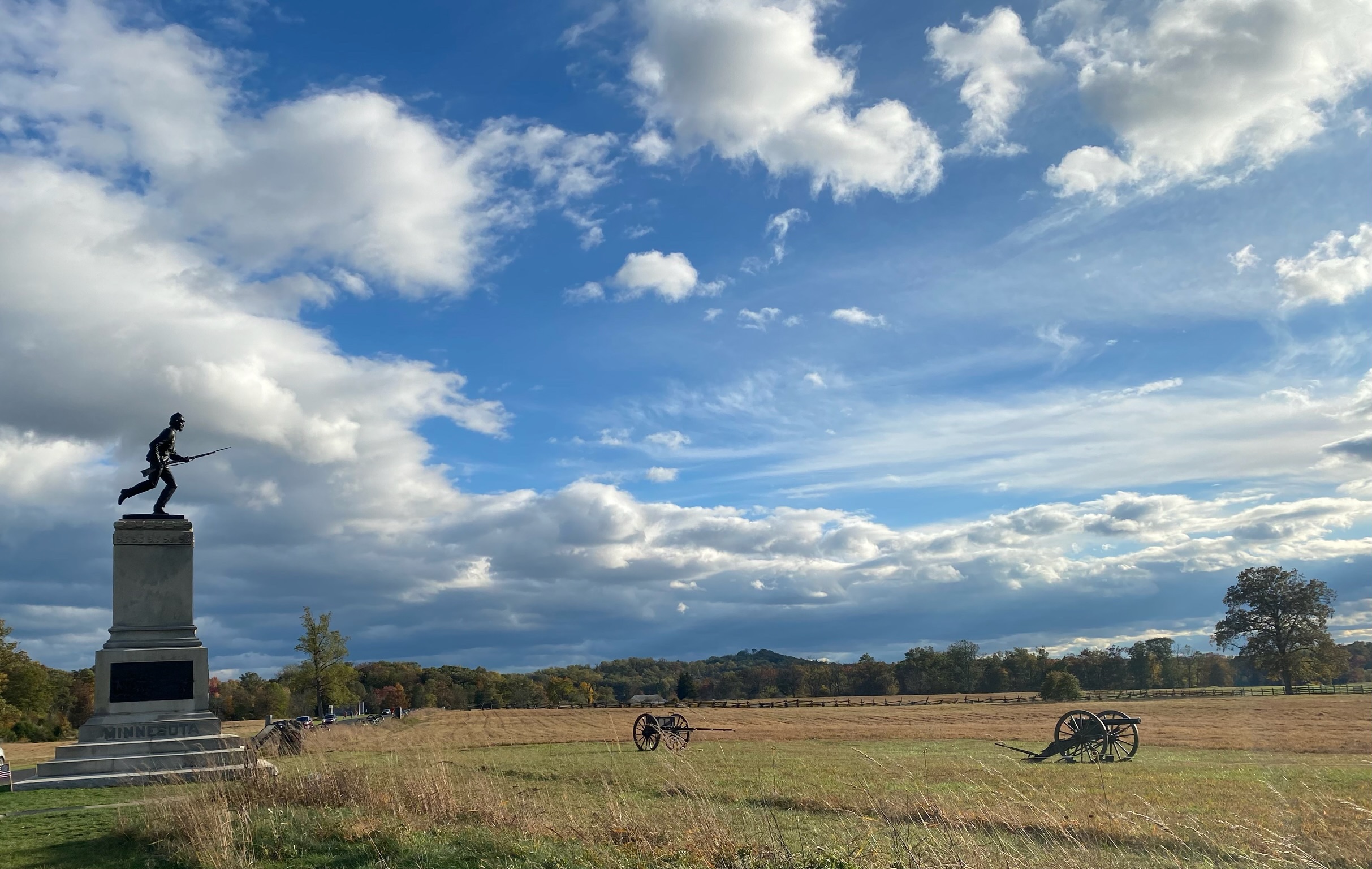
We toured several of the important battle sites in the area, including cemetery ridge where there is a monument commemorating the 1st Minnesota Regiment. On July 2, 1863 at 6pm, Union General Winfield Hancock watched as a wave of Conderates breached a gap in the Union line. He ordered the hard-fighting, veteran soldiers of the 1st Minnesota regiment to charge, buying time for reinforcements to arrive. They had started the war with over 1000 men and by now only 262 remained. Outnumbered 6 to 1, they knew that the order likely meant death for them. Fixing bayonets on their rifles, the courageous Minnesotans raced forward. Man after man fell, but they were successful in causing the Confederates to retreat buying precious time for reinforcements. 215 of the 262 Minnesotans left were killed, wounded or captured.


It was very sobering to see the sacrifices made by these previous generations and others since to keep our country united and all our citizens free. We highly recommend a visit to Gettysburg.
Leave a Reply