
A cold front was sweeping through much of the country so we headed southeast out of Roanoke to the coast of South Carolina. We drove past a few cotton fields along the way.


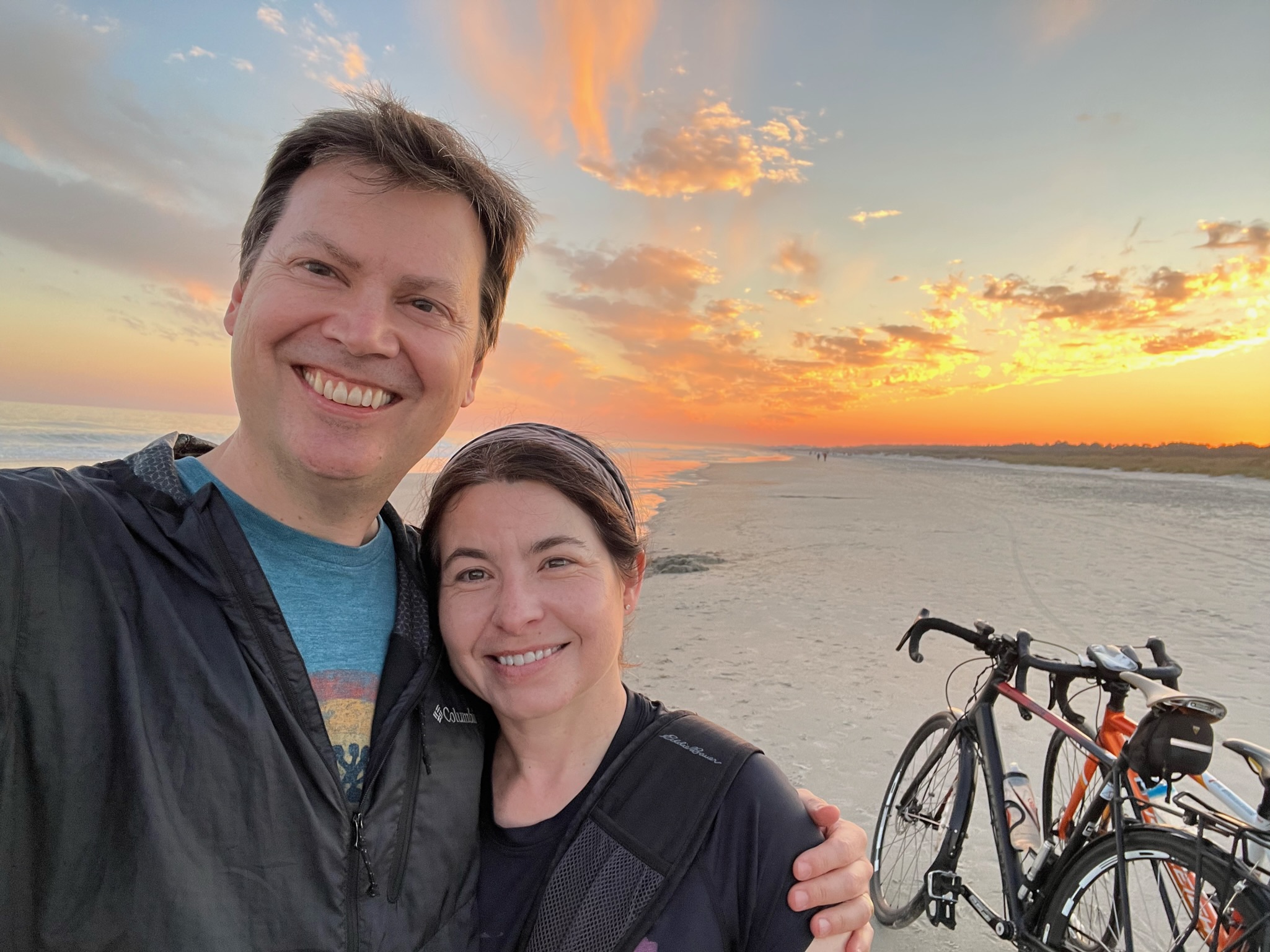
Our first stop was Myrtle Beach State Park where we camped just steps from the beach. The weather was a bit cooler the day we arrived, but it was still pleasant to walk on the beach and we saw great colors at sunset. Between November and February, riding horses on that section of the beach is allowed and it was a popular activity. While fun for the riders, as pedestrians we didn’t care for the mess the horses left behind.


Next we stayed two nights at Huntington Beach State Park, about 20 miles south of Myrtle. This beach was beautiful, more in nature and with great sand. Our campsite was a five-minute walk to the beach. We really liked this park – not only was the beach great, but there were large marshes and nature trails to explore, which we did by bike.


We even took a lengthy bike ride on the beach when the tide was low before sunset on the second day. We were very lucky to see a baby turtle making its way to the water and spotted a few different jellyfish on our last day there.


We also visited the old Huntington castle called Atalaya located in the park. Archer and Anna Huntington built a Spanish and Moorish inspired ocean-front “winter home” there in 1930. Archer was the son of a shipping and railroad tycoon. Anna was a well-known sculptor- particularly known for her sculptures of wild animals. They purchased three plantations along the ocean and transformed them into a sanctuary for birds and wildlife that later became a state park.


Finally, we moved further south to James Island County Park (located 15 minutes from Charleston and 15 minutes from Folly Beach), and stayed three nights at that campground. We decided to visit Folly Beach on our first day there as it was supposed to be in the 80s. It turned out to be much cooler at the beach that afternoon with the winds coming off the water! It was still fun, but we kept our coats on as we read books by the beach and waited for the sunset.


On the second day, we took a tour of the McLeod Historic Plantation. This tour was from the perspective of the African Americans who lived and worked there through slavery and after. It was very sobering to see and hear about this experience and understand the forces that were at play during these times. Even after slavery was abolished, they had a tough life. We were surprised to learn that people still lived in the small slave cabins at McLeod until the 1970s. This plantation primarily grew sea island cotton. Sea island cotton was prized for its long silky threads and was much more expensive than regular cotton. A few plants were still growing there and we got to see how hard it was to pick the cotton and not get your fingers pricked by the large thorns inside the pods.


We then went to Charleston and saw its many historic buildings, churches and homes. Many of the plantation owners built expensive homes in the city where they could show off their wealth. We were enamored by several of the cobblestone streets that were made of river rocks from England. The British used these stones as ballast in the ships they sent to the colonies. When they got to America, they unloaded the stones on the docks to make room for the cargo they were hauling back to England. Not wanting to haul them too far away, the citizens of Charleston used them to pave their streets. Most of these cobblestone streets were near the old docks.


We noticed that Christmas comes early in the South. Starting Nov 1, we started seeing Christmas decorations. In fact, the park we camped at outside Charleston was launching their annual Festival of Lights when we were there. We joined in their opening night with hundreds of others to walk the 2.5 mile route with animated lights. Many of the campers also decorated their lots which was fun. It was weird to see Christmas lights among the palm trees, but when in Rome…


Leave a Reply