
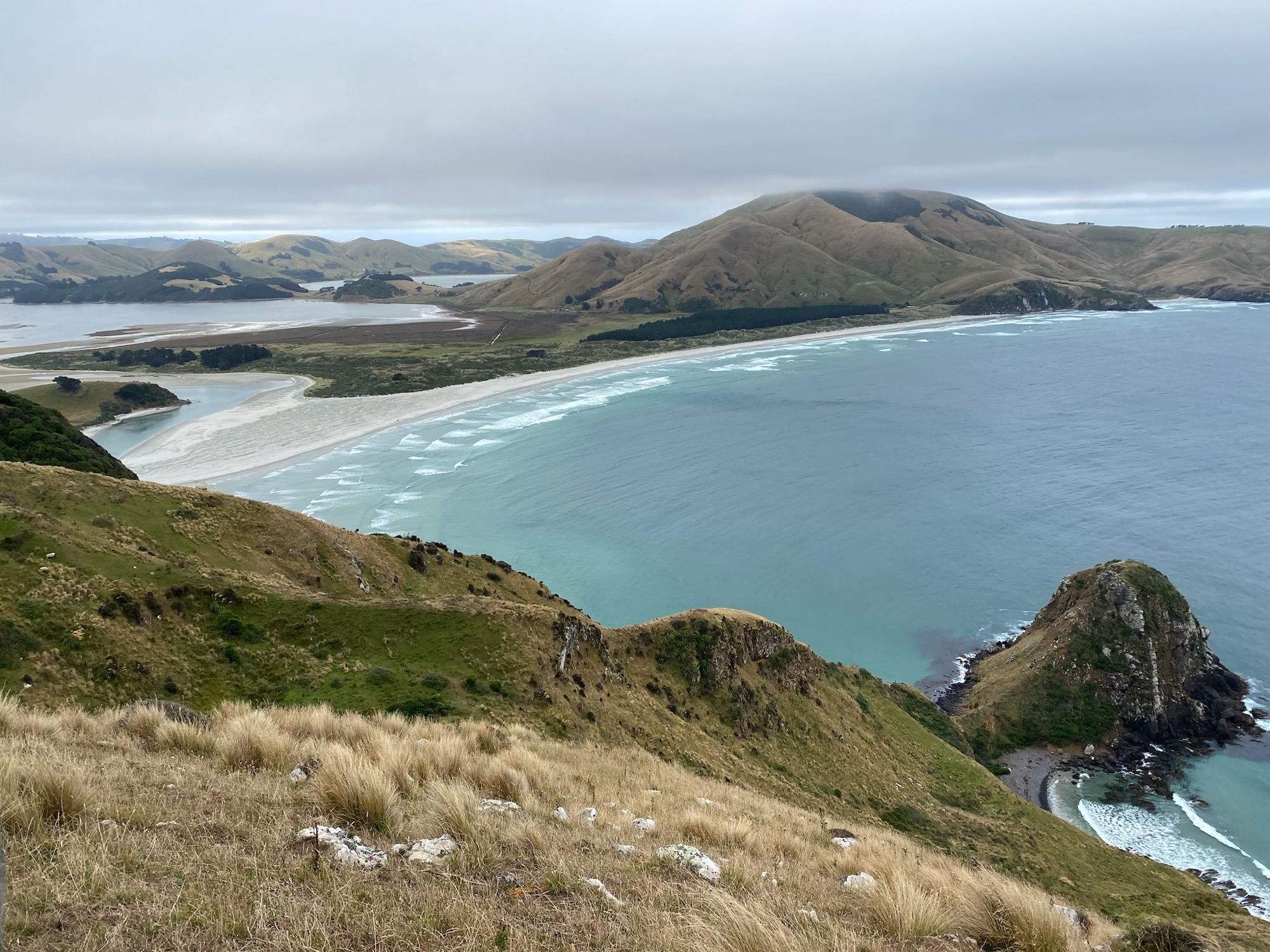
The Otago Peninsula is full of interesting contrasts. The drive from Dunedin to our campground in Portobello winded along the northern coast right next to the water. Small port-side villages dotted the way – all with fantastic views of the sound. Inland, it was all steep hills and mountains, with sheep and cattle herding on impossible slopes. And at the tip there were tall, steep cliffs and crescent beaches, home to fur seals and penguins. And to Sophie’s delight, beautiful flowers along the way.


After dropping our camper off, we headed across the peninsula on a windy road to Sandymount Recreation Reserve for some hiking. The trail started by taking us through a tunnel of giant trees to reach the grassy tops of the sea-side cliffs. Like much of New Zealand, most of the native forestlands were logged in the 1800s and converted to farm and pasture land. This area was no exception, as the trail traversed active sheep pastures to reach the viewpoints. The views of the South Pacific from the top of these cliffs were breathtaking. In order to find the trail, we had to follow some yellow painted posts. The trail to return went through a sandy area with giant grasses and bushes. We were lucky to see a black and white fantail bird at one point dancing just above our heads, opening his fantail to attract insects or maybe a mate.


The next morning we visited Larnach Castle – the only castle in New Zealand. It was built in the 1870s by William Larnach, an Australian banker who came to Dunedin during the gold rush. It was situated on one of the highest hills on the peninsula, giving it amazing vistas. Sophie and I enjoyed a lunch of venison pot pie in the banquet hall before beginning our tour. We then toured the interior of the castle, with the highlight being the views from the tower. We also explored the gardens which featured many native New Zealand trees and plants. They were so exotic to us, and seemed to grow so big. The gardens also accentuated the vistas throughout the estate, and made for a pleasant day.


Later that afternoon, we headed to the Otago Peninsula Eco Restoration Alliance (the OPERA). We wanted to try our luck at seeing penguins again, and this organization offered tours on their private reserve – as well as their penguin rehabilitation center. The OPERA is working to restore part of the coast back to native forests, which is where yellow-eyed penguins (rarest in the world) nest. There are only around 300 of these penguins left on the New Zealand mainland. Everyday the adults swim out to sea to feed, then cross the beach back to their nests in the evening. This is when you might be lucky and spot some coming back across the beach. Unfortunately, it was still moulting season in February, which is when the penguins lose their feathers and regrow new ones. They cannot swim during this time and stay hidden. We were able to see some however in their rehab center, and some fledglings by the beach in a holding area as they were getting ready to be released back into the wild. They were taller than we expected (about 20 inches) and featured distinctive yellow feathers around their eyes. Even though it wasn’t in the wild, we were pleased to see some penguins and were happy our tour was supporting the organization’s efforts to help this species survive extinction.


Leave a Reply