
As we drove north from Riverton, the mountains of the Fiordland National Park came into view (New Zealand spells fjord with an i for some reason). We stopped for a picnic lunch along the shore of Lake Manapouri – the first big mountain lake on our drive. From there we continued north to Te Anau which is the next large lake and the name of the town we camped at. We had a couple hours after we set up camp to do some food prep. We cooked up some mushrooms, pasta and butternut squash with fresh sage for future meals.


Next we went on a tour of the famous Te Anau glow worm caves, located across the lake. We went there by boat, which took about 30 minutes. Much to our surprise, the lake was much larger than we expected – and much choppier. It was also pretty cold and windy. We sat on the open top deck on the way there, but stayed inside on the way back. To preserve the darkness in the cave, we were not allowed to take any pictures. The first part of the tour was walking, and we had to crouch under low spots in several places. There was a loud, rushing stream with waterfalls as we went along. At one point we could see eels in the stream. Apparently these New Zealand eels grow to be the longest in the world – over 10 feet! At the end of the walk we boarded a small boat (just 12 of us at a time) to float the rest of the way up the cave in pure darkness. The guide used ropes to pull us along – and this is where the glow worms really shone. It was like looking up at a star-filled sky. There were hundreds of them. Each glow worm makes dozens of sticky, silky threads hanging a few inches off the ceilings. Then, they light up their tail to attract flies and moths who get stuck in the threads and get quickly devoured. The worms are actually a type of maggot, and they grow to about two inches long. Eventually they wrap themselves in a cocoon and turn into a large fly that looks kind of like a big mosquito. But, they don’t have any stingers or mouths – and only live a day or two in order to breed.


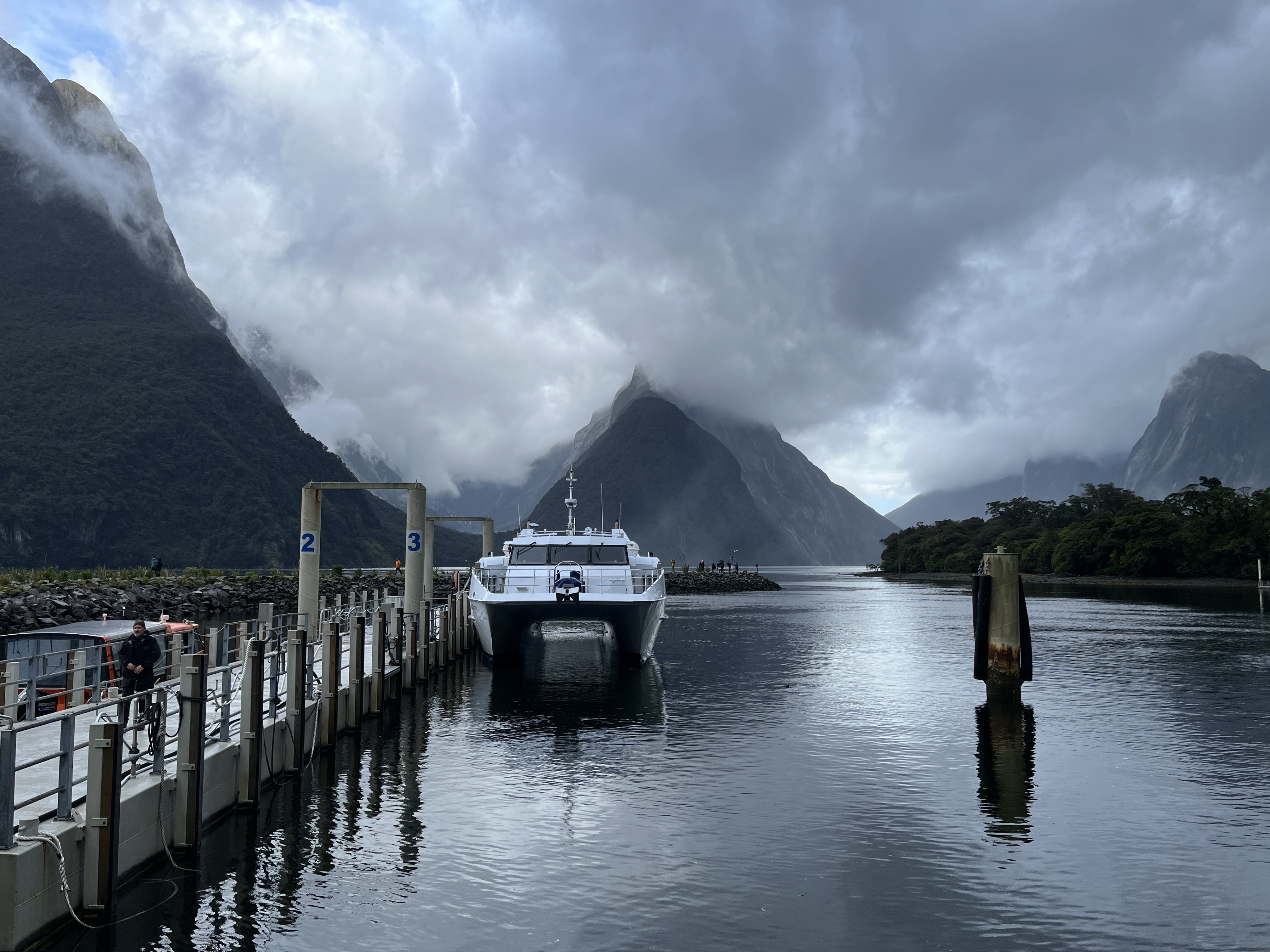
It rained hard overnight. It was pretty loud in the camper, but we were so thankful we were not in a tent. The next morning we got up early for a tour to Milford Sound, which is about a two-hour drive north of Te Anau, 120 km away. We were picked up in a mini bus with about ten others. Our guide was a life-long resident of Te Anau and was full of great information and stories. We stopped several times on the drive there and back to see good views or take short walks. Since it rained a lot the night before, we saw waterfalls everywhere cascading off the mountains. Rain is not uncommon in that area as it averages 268 inches per year – one of the wettest places on earth. The rain also brought snow on many of the mountain tops – and even a couple rainbows. Our guide said the afternoon before there were no waterfalls or snow on the mountains on the drive, so I guess we were lucky.


Once we arrived at the sound, we boarded a boat with a few other groups. Technically, Milford Sound is a fjord because it was formed by glaciers – not a river. Normally, there were only three waterfalls on the tour, but since it rained so much the night before we could see many more. The weather wasn’t great – but we got little peeks of blue sky here and there amidst the clouds and rain. We were also lucky to see some fur seals gathered on a rock.


The boat was very comfortable, and our tour included a picnic lunch that we ate onboard. We got to know the other travelers in our group and all had a good time. On the way back, we saw some lobster traps and learned from our guide that they were actually for crayfish – but not the kind we are used to. These get really big, around 50cm, and are like lobsters without the claws. Almost all of them are exported to China where they are prized, but we got a tip from our guide that a cafe in town was going to serve some the next day for the first time, so we went there for lunch and enjoyed it in a risotto.


Leave a Reply