
After a leisurely morning and some shopping, we took the train one stop to Kita-Kamakura station close to where we ended our walk the day before. Our first visit was the magnificent Engakuji Temple which was built in 1282. The wooden structures were so amazing, built from massive cedar trees similar to ones found throughout the grounds. It also houses the national treasure Ogane – a large cast bronze bell crafted in 1301, that was placed on a steep hill accessed by climbing over 140 steps. Legend has it that when the bell was commissioned, the master craftsman was having problems keeping the cast from cracking. He prayed on it for five days and received a vision that he was to look in the bottom of a nearby pond where he found an ancient bronze dragon head that he melted and used to create the bell – which this time did not crack.


It was already lunchtime when we finished, so we decided to stop at a restaurant serving the traditional kaiseki multi-course dinner. I tried a set menu with cold Udon noodles, while Sophie ordered their featured set. This type of food is all about the delicate combination of flavors, textures and visuals created on the tray. The atmosphere in the restaurant was so calm and pleasant, and the experience of mixing and matching all the little delicacies was a great one. Sophie’s meal won the show, and she shared some things with me – like a delicious sea snail in the shell.


After a quick stop at the Jochiji Temple, we then entered the Daibutsu hiking trail for a brief walk to Genjiyama Park. This park features a statue of Minamoto no Yoritomo, the samurai warrior who made Kamakura the shogun capital in 1185.


Next we walked to Zeniarai Benzaiten Ugafuku Jinja shrine, which was accessed by walking through a cave in the mountain. On the other side, there was a shrine to the harvest and fertility deity where one could wash money to give it good luck. We made a donation to get supplies to participate. First, we lit a small candle and placed it on a rack. Then, we lit a bundle of incense and placed it in a pot with others. After that, we entered a cave where water was dripping from bamboo pipes into stone troughs carved into the floor. This is where the money washing process was happening: we placed our yen coins in a bamboo basket, and used a bamboo ladle to pour the water over the coins. We are not exactly sure what this did, but we assume whatever we used those coins for in the future would be fortuitous.


We continued to the nearby Sasuke Inari Jinja shrine which is a Shinto shrine featuring 49 of the iconic vermillion torii gates. People or businesses pay to sponsor each gate and banners throughout the shrine, either giving thanks or seeking good luck. Walking through the surreal tunnel these gates form always makes for great photos.


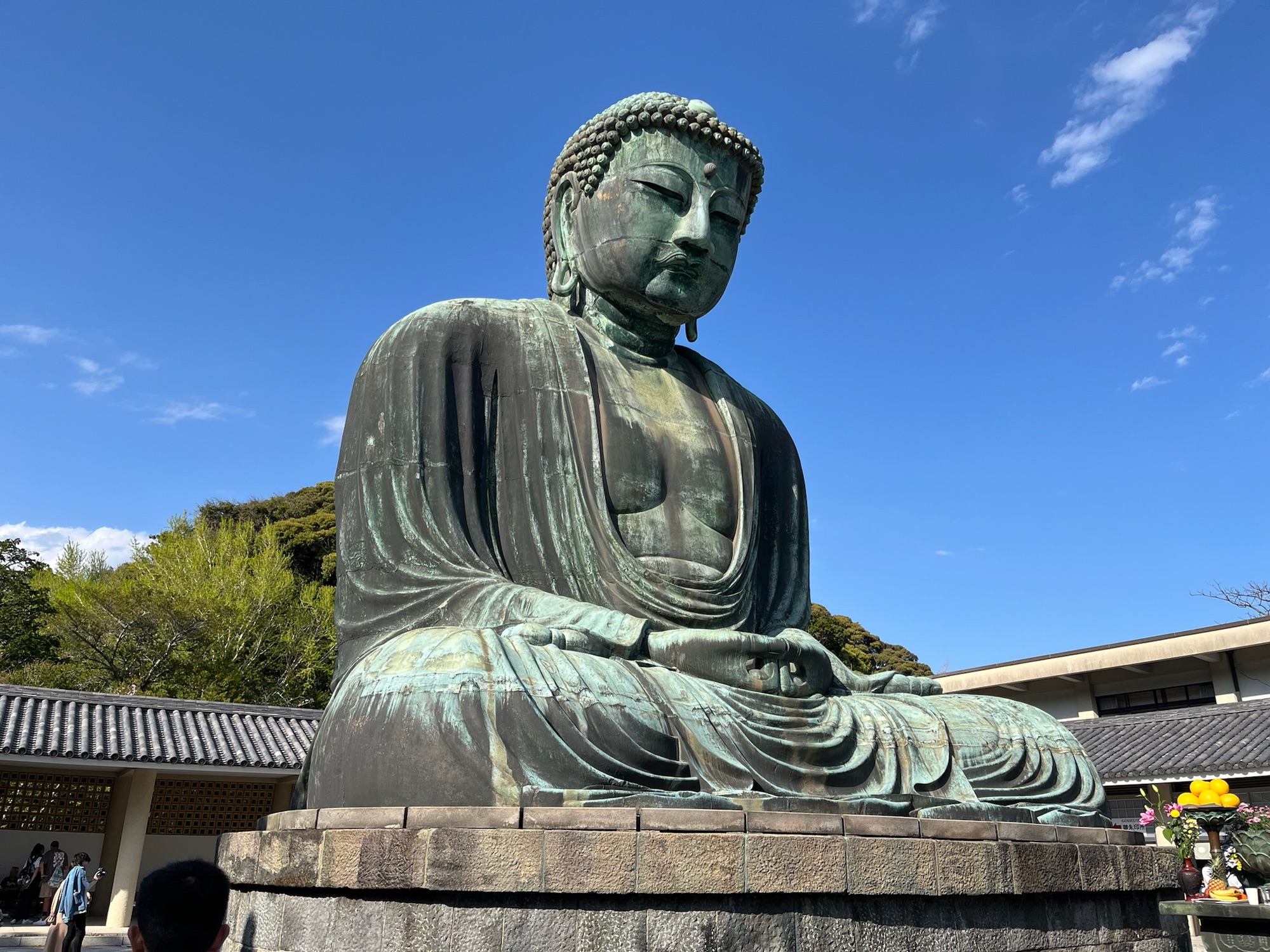
Our next stop was Kotoku-in Temple to see the Daibutsu or Great Buddha of Kamakura. The construction of this enormous bronze statue was started in 1252 and continued for approximately 10 years. It is nearly 40 feet tall (over 11 meters) and weighs 121 tons! It used to be housed inside a giant hall that was destroyed centuries ago by a typhoon and tsunami. It has sat outside ever since. What an amazing feat of artistry and engineering!


Our final stop for the day was our favorite: Hasedera Temple. This sensational complex is also one of the oldest in Kamakura dating back to 736. It is famous not only for its Buddhist statues, but also for its gardens. It features several ancient halls amongst the gardens full of statues of deities that were worshipped during the shogun era. One of the most important statues is over 9 meters tall making it one of the tallest in Japan, and believed to be carved from the same camphor tree as a similar one in Nara. Also found there is an ancient rotating “bookcase” that houses thousands of scrolls with Buddhist scriptures and prayers. We really liked some of the very different stone statues we discovered in this complex. But what made it so amazing to us were the grounds featuring flowering plants, water gardens, a bamboo forest and amazing views over Kamakura and its beach.


We took the historic train back to the town center and ate Tonkatsu for supper, a Japanese dish of breaded deep-fried pork cutlets (and other proteins). They have perfected the process making the outside delightfully crispy, while the inside is tender and juicy. I had the pork cutlets and Sophie had fish fillets. Makes my mouth water just thinking about it!


This was another amazing day in Kamakura! This city continues to surprise and delight us at every turn.

Leave a Reply