
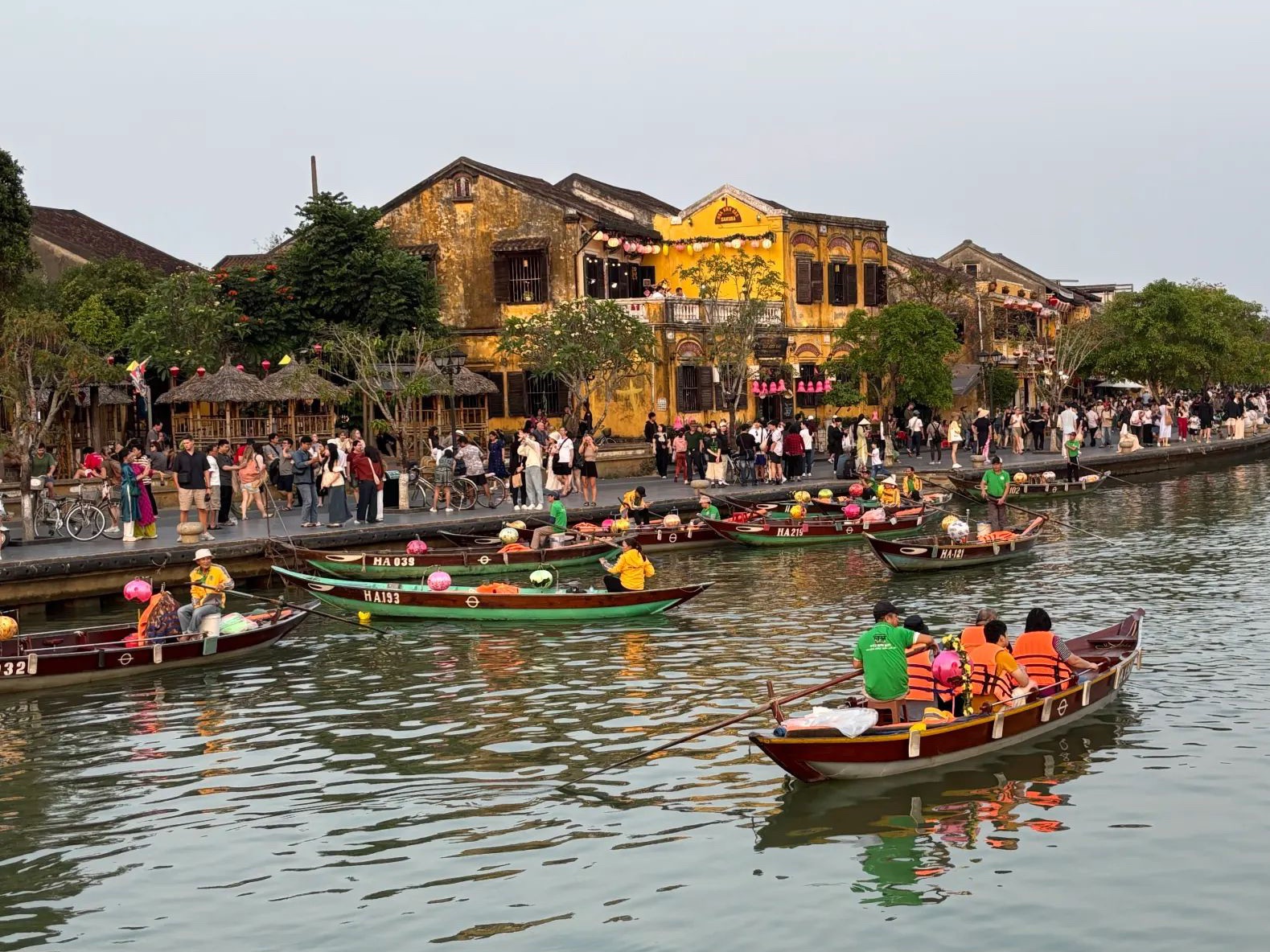
Hoi An turned out to be our favorite spot in Vietnam so far. It was known for its spice trade as early as the 7th century when the ancient Cham Kingdom ruled a wide swath of South East Asia. By the 16th and 17th centuries, it became a bustling international trade hub, attracting merchants from China, Japan and Europe looking for spices and silk. Many of these merchants built trading businesses and homes along the river in Hoi An, creating a unique fusion of architecture in the city.
In more modern times, the river began to silt up and the nearby deeper water port of Da Nang started becoming favored. This left Hoi An largely forgotten until the 1990s when international tourism started increasing, especially after Hoi An was declared a UNESCO World Heritage Site in 1999. Its more than 800 historic buildings showcase a blend of Vietnamese, Chinese, Japanese and European influences.
Today the old town is a bustling tourist and shopping scene, but still maintains immense charm. We stayed in a hotel just across the river from the old town, the River Town Hoi An. It had very nice gardens with lots of blooming plants and lanterns hanging everywhere. As we got closer to the old town, we were not only impressed by the buildings, but by all the plants and flowers growing around them. Giant bougainvillea trees draped over the entries, creating a natural flowing canopy on some buildings.


Merchants from different countries not only lived side by side in the old town, but also tried to build their own communities through community temples, assembly halls and buildings. You can buy a pass that lets you visit 5 out of 22 historic places in the old town. The first place we visited was a Japanese covered bridge that had a temple inside. Emblematic of Hoi An, this beautiful bridge was first constructed in the 1590s by the Japanese community to link it with the Chinese quarters. The structure is solidly constructed with Japanese timber joinery allowing to survive earthquakes.


Wandering down the narrow streets was a treat for the senses. Colorful lanterns were strung everywhere. Every building was unique and beautifully restored, and we couldn’t stop taking pictures. It was also kind of cool that all the buildings were still in use. Hoi An is still known for its spices, coffee, silk garments and lanterns, tailor shops and food.


Some of the historic family houses are open for tours and still inhabited by the sixth or seventh generation of their respective families, like the Tan Ky house. We toured several of these old houses, and it was interesting to see how they incorporated the different architectural details of their home countries into them. Many featured intricate wood carved panels and ceiling beams.


Some of the wealthy merchants built elaborate assembly halls that served as a worship and community center for their constituents. We toured a Chinese one called Phuc Kien Assembly Hall. It featured beautiful courtyards full of exotic sculptures, flowering trees, shrubs and bonsais. Tucked behind the courtyards were several shrines for worshiping and making offerings to different deities and ancestors.


We bought Banh Mi sandwiches for lunch at Banh Mi Phuong, a place made famous by Anthony Bourdain. We ate them at a nearby bar with some locally brewed Huda beer. If you haven’t eaten a Banh Mi sandwich before, you would probably be surprised to find it is made on a crispy, airy baguette (a holdover from the French). These delicious sandwiches feature different type of cold cuts, Vietnamese pork sausage, and/or pâté, along with pickled carrots and daikon radish, fresh herbs, cucumbers, lettuce and some condiments like mayonnaise, chili sauce or other seasonings. It is a feast for the mouth and disappears much too soon.


As we wandered around, Sophie noticed a cute silk dress in one of the shops. Before we knew it, she was picking fabric, being measured and within minutes she had purchased a bespoke silk dress that would be ready within 24 hours. All for a price way less than any mall store back home.


As evening approached, lantern-lit boats started lining up to take tourists on evenings rides on the atmospheric river. We visited the night market for supper and decided to try one of Hoi An specialties, Banh Vac (which means white rose), a delicate subtly flavored shrimp dumpling. We also ate a chicken and rice dish, recommended by our driver the day before, all very tasty. We ended the meal with some rolled ice cream, made before our eyes by a skilled street vendor.


On the way back to our hotel, we admired the river views, all the boats gliding down and the reflection of the lanterns on the water. It was also a tradition to light a candle on a floating lantern and float it on the river for good luck, which we did. What a fun day in Hoi An!


Leave a Reply