
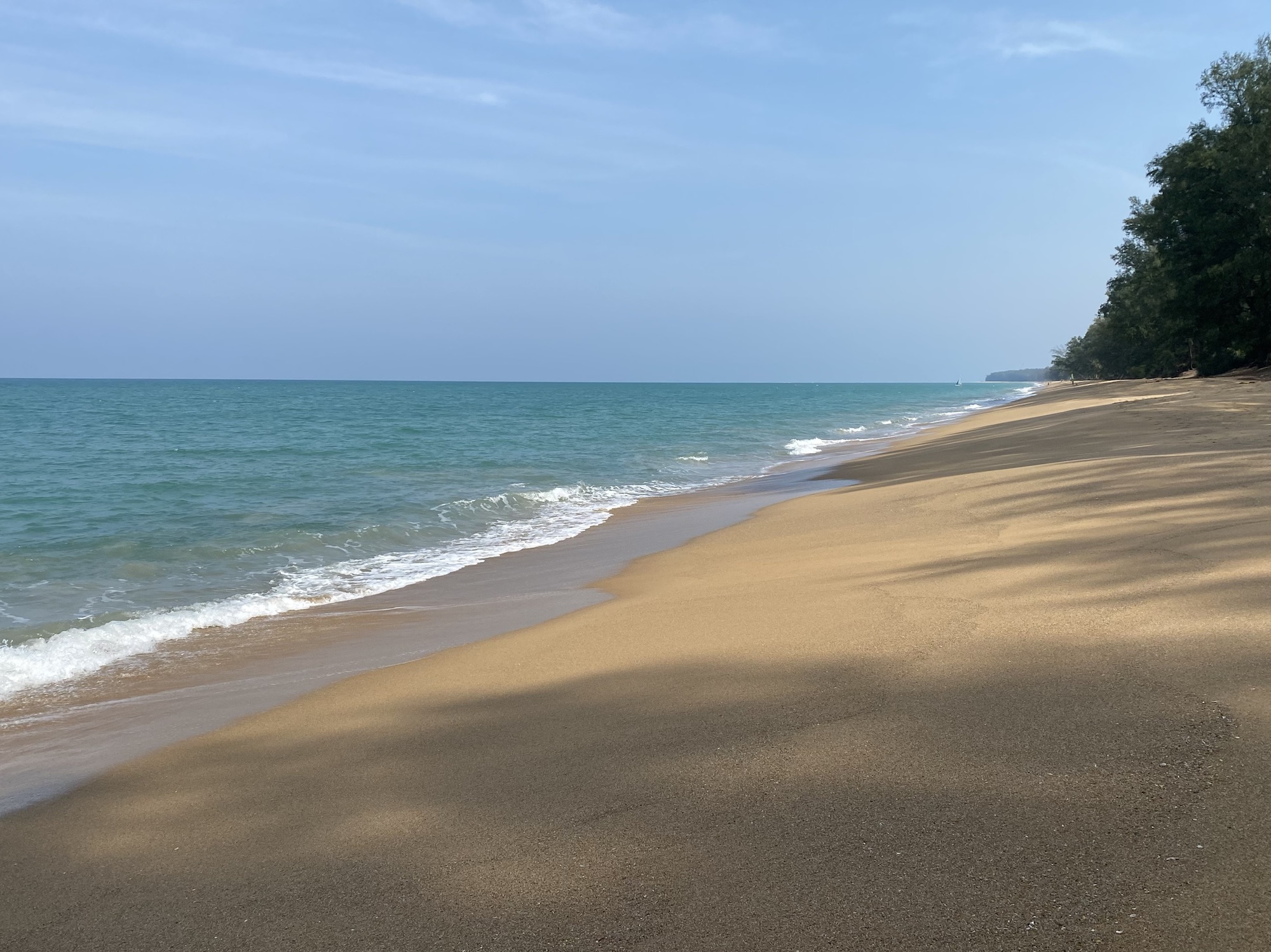
One of our favorite spots from our south east Asia trip last year was a resort on the northwest coast of Phuket island called the Sala. We loved it so much we decided to return to this paradise for a little relaxation. The resort sits on Mai Khao beach, which is a pristine beach within a nature reserve called the Sirinat National Park. This beach is a recorded breeding ground for endangered green sea and leatherback turtles. In order to preserve this fragile ecosystem, no motorized vehicles or watercraft are allowed there so it is a very quiet beach.
Like last year, we got a villa with our own private pool – a luxury we grew to appreciate in the hot, tropical climate. The villas have air conditioned bedrooms but the bathroom is on a patio outdoors by the pool. The resort grounds are very serene with beautiful trees and plants in between units. No mango fell in our shower this year;)


Our routine was wonderful. A typical day started by a walk on the beach and a swim in the warm Andaman Sea (trees provided ample shade in the morning). We were so happy there were no jellyfish to be found! Then, it was time for a late breakfast buffet overlooking the pretty grounds. The food was always delicious and you could order à la carte Asian dishes to complete your meal.


Afternoons were spent in our villa courtyard, cooling off in the pool whenever we got too hot. After 6pm we would walk back to the beach to see the sunset, slightly different everyday.


Afterwards, we would walk about five minutes to a little restaurant near the resort for delicious fresh seafood and Thai cuisine. We discovered it last year and it didn’t disappoint. You would pick whatever seafood you desired from the coolers in front, and they would prepare it for you many different ways. We tried grilled fish in a salt crust, steamed fish in lime sauce, fried fish, and other delicious Thai dishes. We love Thai food! They also had a stand with some tropical fruits in front so we were happy to eat mangosteen again as well as juicy mango and watermelon. We would usually end the day with one last swim. One night, we took advantage of an outdoor movie showing at the resort, though we were the only ones.


One morning, we borrowed bikes from the resort and a guide took us on a little tour around a nearby lake and in the countryside by many little farms. Sometimes we would recognize the crops, like watermelon and even corn. Other fields were full of vegetables or greens that we don’t typically get in the US. There were also many different fruit trees. We saw a cashew nut tree with big, plump fruit ready to be picked. Apparently, the fruit (pear-shaped above the nut) is edible, but doesn’t keep more than a day once picked.


We saw lots of birds, a three-foot monitor lizard and a few dead snakes along the road. Sophie didn’t really like that part, and I guess it was a good reminder that we were in tropical surroundings. There is still a big difference in levels of development from one street to the next in Thailand – even in a wealthier area like Phuket. A lot of the houses and businesses for locals looked pretty primitive (at least to our eyes). Of course, they don’t have to build for Minnesota winters, so perhaps strong roofs, enclosed rooms and paved driveways are not a priority.


Another day, we went on a driving tour to some sites in Phuket. Our resort was situated on the northern end of the island, so it was actually over an hour drive to get to the more popular parts of Phuket. First we visited Wat Chalong, built during the beginning of the 19th century – and the largest and most revered of Phuket’s temple.


Next we drove to see the Big Buddha, which is sitting on top of a sacred hill that had good (albeit a bit hazy) views of Phuket. It was an impressive 45 meter tall (148 feet) white Buddha, surrounded by many other monks and religious statues. A lot of monkeys were on the grounds – keeping a close eye on tourists who might leave a snack unattended. They can be pretty aggressive, we saw one snatch a bottle of juice off of a lady’s lap – much to her surprise.


Finally we visited a part of Phuket old town, which had cute and colorful sino-Portuguese style buildings in various state of restoration. These were once occupied over a century ago by the island’s tin barons. Tin mining used to be the major source of income for the island starting in the 16th century, attracting Chinese immigrants who came from Penang, Malaysia. There were an estimated 30,000 Chinese working in Phuket in the tin business by 1860. Some made fortunes and built mansions blending Chinese and European architectural styles. These buildings now feature cute shops and cafés.


We stayed at the Sala for four days, which was a good amount of time for us to relax at this point in our trip. We hope that someday we can come back to this little paradise. We learned that they have opened other Sala locations in Thailand, and we would love to visit one of those in the future.


Leave a Reply