
After leaving Killarney, we headed north to the Burren area. The Burren is an interesting natural region along the western coast of Ireland in County Clare. A geological marvel with a UNESCO Geopark accreditation, this 10-square-mile limestone plateau is home to an other-worldy landscape and a very unique ecosystem. It is a place where Arctic, Alpine and Mediterranean plants and flowers coexist. And it is also home to the Cliffs of Moher, hidden caves and ancient monuments.
We camped along the shore near the small village of Doolin, which is famous for its pubs and its Irish traditional music. From our campsite on the coast we walked to the small town passing some very friendly cows along the way.


Sophie and I were feeling a bit under the weather, so we ended up skipping the pubs and instead enjoyed the crazy landscape along the coast by our campground. The highlights were the miles of limestone pavement. Geologists say these were formed from fossils and sediment at the bottom of a tropical sea. Apparently, they have figured out that Ireland was located just south of the equator millions of years ago! It was really fun to walk along the limestone and hop over all the cracks and waterholes. Sophie was amazed by all the flowers and plants growing in those cracks and holes! We also spotted some wooden tubs near the shore and went to find out what they were. It turns out that seaweed baths are quite an experience but they were closed by the time we got there. Maybe next time!


We started the next day by visiting the nearby Cliffs of Moher, which have been a popular tourist attraction since the early 1800s. The steep cliffs bordered by a bluff-top trail were beautiful, but we agreed that we were more impressed by the Kerry Cliffs that we had seen two days prior. The weather was cooperating and we even got the sunglasses out to enjoy the coastal views of the Atlantic Ocean!


Afterwards we headed inland to explore more of the Burren. Our first stop was the tiny village of Kilfenora where we visited an interesting museum that explained more about the region. We had tea and lunch in a quaint cafe next door. Following lunch, we drove about 15 minutes north where we got an archeological tour of a ring fort that was inhabited between 1000 and 1600 AD. It was called the Caherconnell stone fort. Our tour guide was an enthusiastic young woman from Pennsylvania who did an internship there in college and returned after graduating for a full-time job. They found many interesting artifacts at the site that helped them paint the picture of who lived there and what life may have been like for them. Artifacts such as a comb, a pen, and even a glass bead, indicated that the family that lived there was cultured and relatively wealthy.


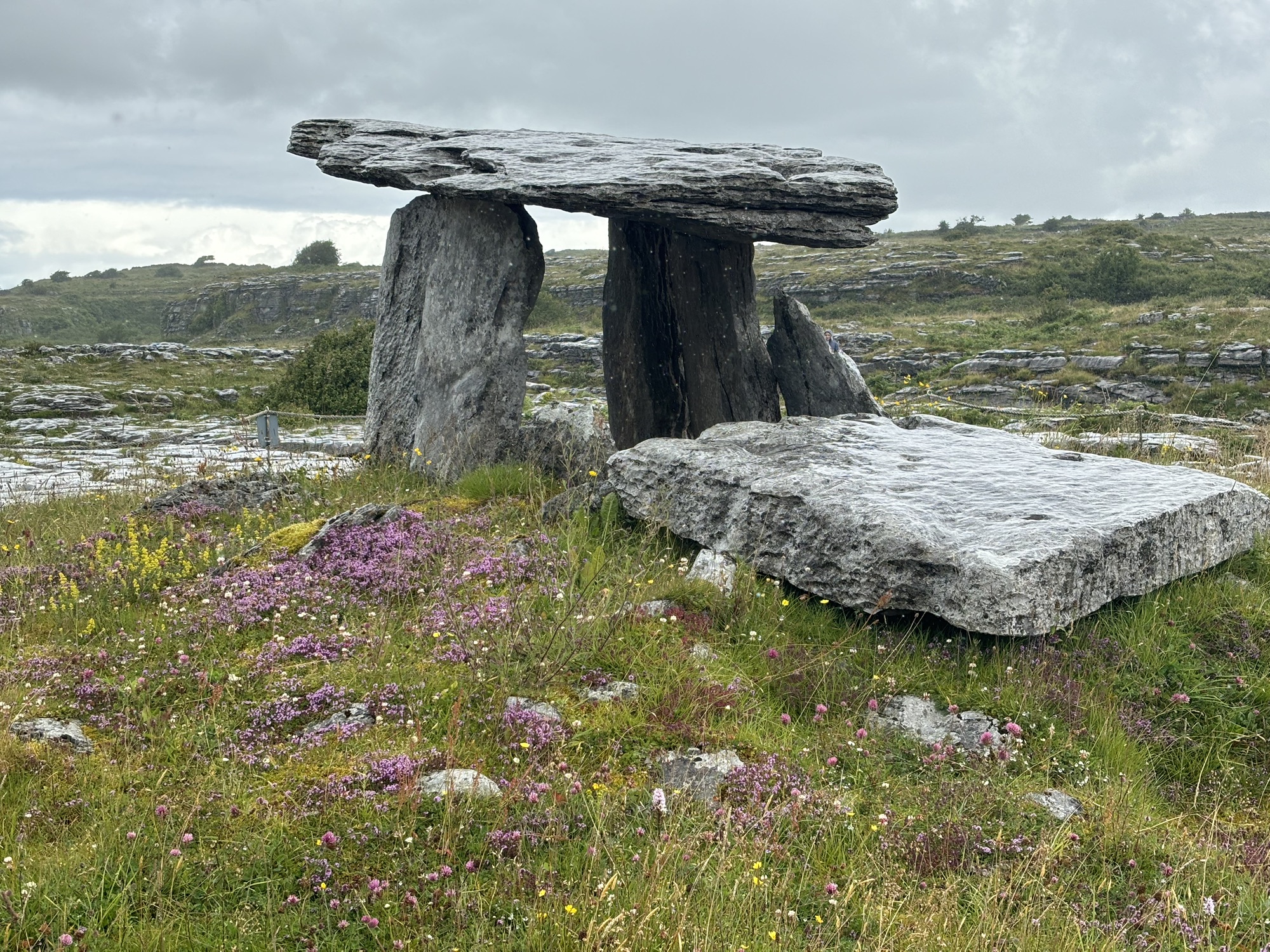
A few miles further up the road, we stopped at the Poulnabrone Dolmen. This ancient monument stands on a desolate hilltop in the heart of the Burren. It is composed of several massive upright stones supporting a large capstone. It is a portal tomb and certainly an important religious site for ancient civilizations. They estimate it was built between 4200 and 2900 BC. There was a steady drizzle falling when we visited it, giving it a haunting feel.


After visiting the dolmen, we left the Burren and headed east for a couple hours to our final destination, the historic Boyne Valley.
Leave a Reply